Hydraulic test bench : principle and operation
Hydraulic test benches are widely used in industry during product development and validation phases. They enable components or sub-assemblies to be subjected to pressure, flow rate, temperature and cycling conditions that closely resemble those encountered in actual use, in order to assess their performance. These tests are used to verify compliance with technical requirements prior to industrialisation and the start of production.
What is a hydraulic test bench ?
The hydraulic test bench is used during the industrialisation phase to verify a product’s behaviour under defined operating conditions. Also known as a test bench, it is a hydraulic system designed to apply controlled stresses to the product and then measure its behaviour using sensors.
Commonly used in industry, the hydraulic test bench is used to monitor a product’s performance during its development, validation or production. It enables the measurement of its operating characteristics, particularly in terms of pressure, flow rate, leakage and mechanical strength, as well as those of the components within the hydraulic circuit.
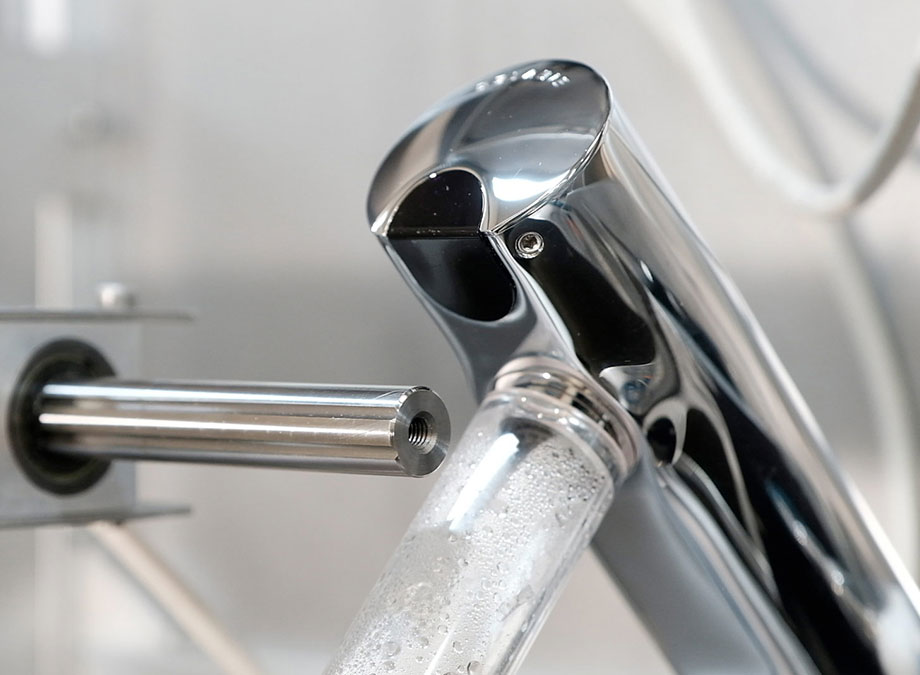
It can, for example, validate the technical characteristics of taps, mixers, flushes or shower columns, in the case of a test bench for sanitary fittings. Industrial test benches are also used in many other applications, including the automotive, nuclear, construction and aerospace sectors, for example.
The tests carried out depend on the product being tested. For this reason, hydraulic test benches are usually custom-built by specialists, taking into account the technical specifications and specific requirements of each product range.
What are the different types of hydraulic test stands ?
There are several types of test benches depending on the nature and life cycle of the product to be tested:
- Performance test bench, or “characterisation test bench”: this allows the hydraulic performance of a product to be measured and adjusted. Hydraulic performance test benches are used to verify or define the maximum technical use characteristics of a product according to various criteria: flow rate, pressure, temperature, tightness, sensitivity, etc.
- Endurance test bench, also known as afatigue test bench: is used to measure a product’s performance after a large number of cycles. Tests can involve several million cycles, withvariations in flow rate, pressure or temperature depending on the chosen protocol.
- Control test bench, or “validation bench“: it verifies and validates the technical characteristics of a product during the production phase. The test bench is used to verify that the product meets the specified specifications before it is placed on the market.
Hydraulic test benches are used to test the hydraulic components of sanitary and industrial equipment in accordance with the procedures in force, the standards or the certifications.
Taps, mixer taps, valves, pumps, hoses – sanitary and industrial equipment is tested by certified bodies such as the CSTB before and/or after it is placed on the market. Standards and certifications provide assurance that the product meets quality, performance and safety criteria.
The tests carried out make it possible to evaluate the following characteristics:
- waterproofing
- hydraulic and mechanical performance
- flow rate
- resistance to wear and tear
- acoustic performance
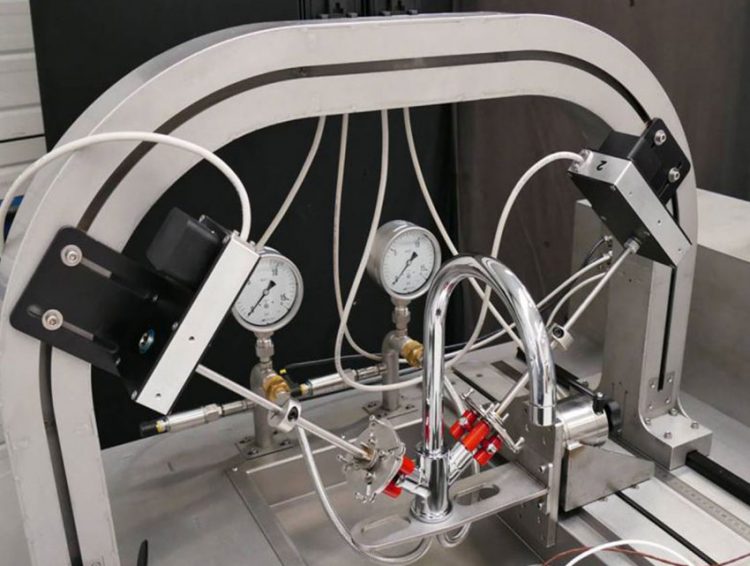
The design of a hydraulic test bench hinges on several key factors: measurement accuracy, ease of use, operational stability and suitability for the test requirements. It draws on a range of technical disciplines, such as mechanics, automation, industrial IT and instrumentation.
The design of a hydraulic test bench involves several preliminary stages. These include, in particular, a requirements analysis, a functional analysis and a value analysis. The design of the test bench also takes into account standards and certifications. Drawing, dimensioning, simulation and design selection are all required when designing a hydraulic test bench.
Do you have a project ? Contact us to bring your testing and validation projects to fruition.
Thibault MARCHAND
LF Technologies, your partner in pushing the boundaries of your testing.
How does a hydraulic test bench work ?
A hydraulic test bench can be semi-automatic or automatic. A semi-automatic test bench guides an operator through the measurement process, whereas an automatic test bench carries out the test automatically and independently.
Automatic hydraulic test benches are controlled by a PC via software that runs various scenarios: test temperature, product position in relation to an instrument. The software records the results of the calculations and measurements, then publishes the results in a file.
Test bench control software must be simple and intuitive to use. The operator must be able to configure the test, monitor measurements and view results via a human-machine interface (HMI), i.e. the interface between the user and the test bench.
During the production phase, the bench is assembled and supplied with its technical documentation. Adjustment and commissioning phases are then carried out to verify that it is functioning correctly before use.
Automated testing helps minimise errors caused by manual handling and reduces the time spent on repetitive tasks. It also makes it easier to run a sequence of tests and retrieve the results.
Hydraulic test benches at LF Technologies
LF Technologies designs and manufactures hydraulic test benches for sanitary and industrial equipment and components. These hydraulic test benches are custom-designed to suit the product being tested, the tests to be carried out and the client’s specifications. They enable a range of tests to be carried out, including leak testing, pressure testing, performance testing and endurance testing, in accordance with the project requirements.
The teams at LF Technologies configure these hydraulic test benches to suit the tests to be carried out, whether these involve leak testing, pressure testing, performance testing or endurance testing. Depending on requirements, they can be used during the development, validation or production phases, as well as in the context of protocols relating to standards and certifications.
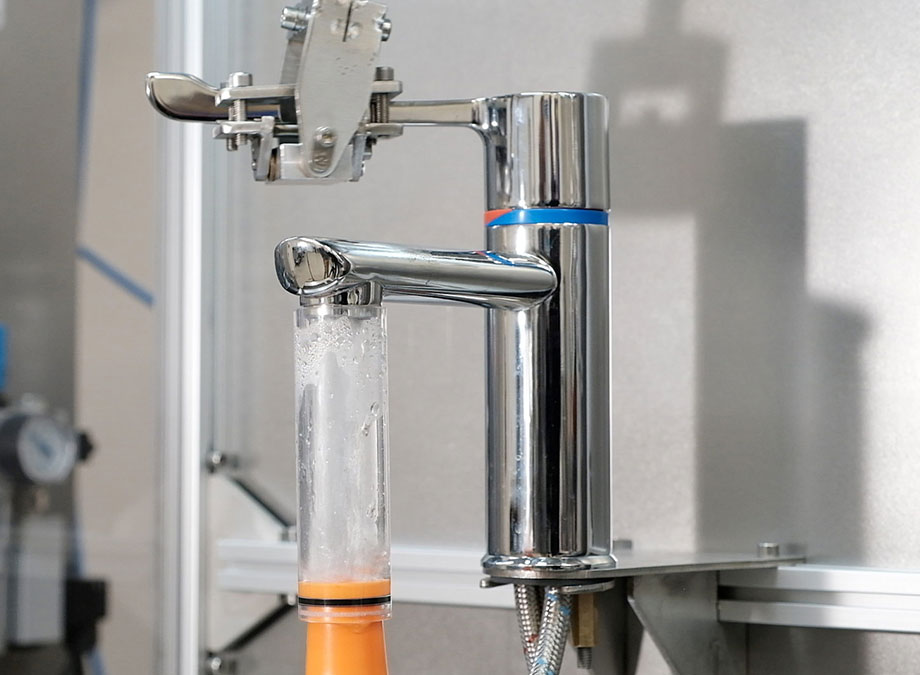
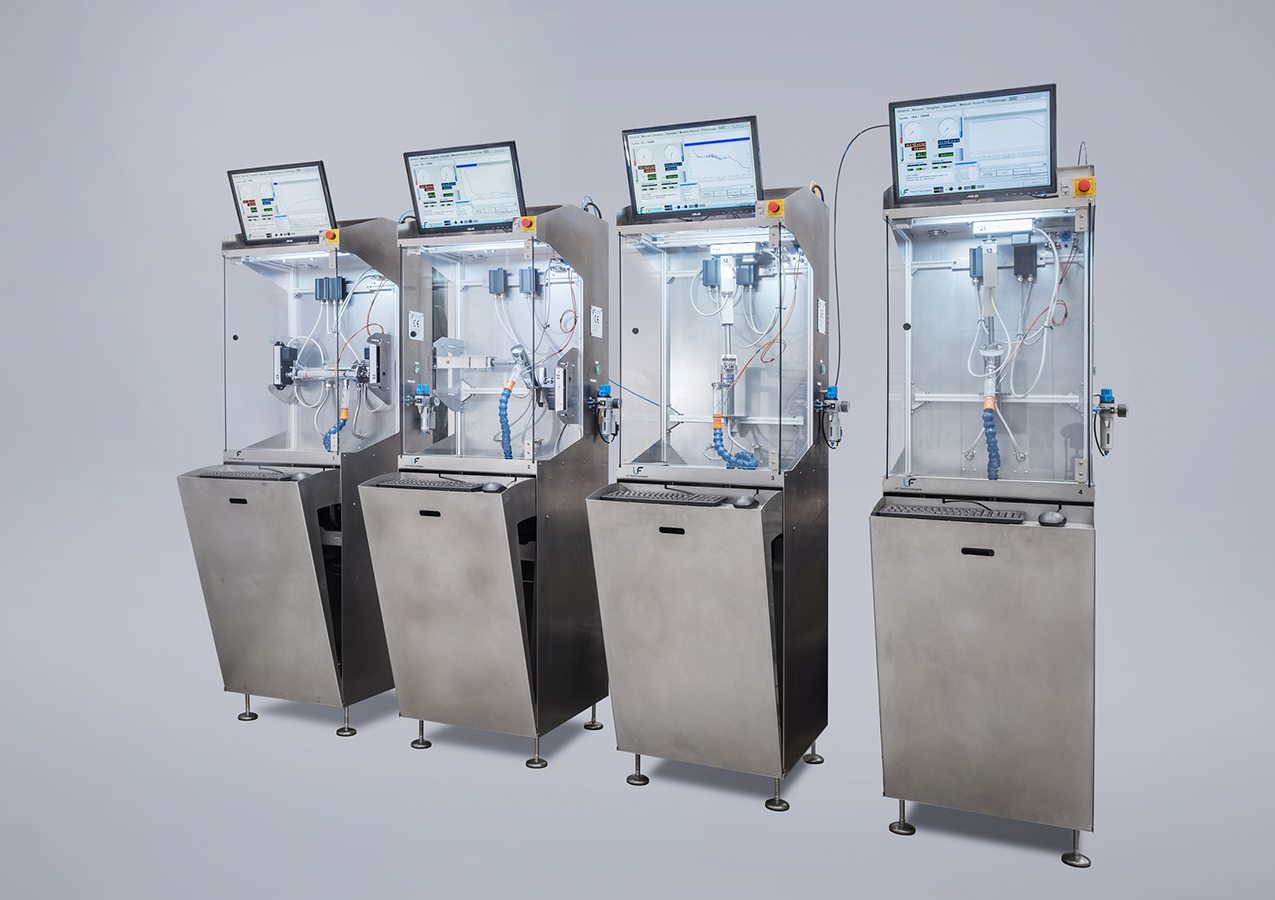
Our range of standard hydraulic test benches is based on a modular design, allowing the bench to be configured according to testing requirements and specifications. Equipped with dedicated HMIs, these benches are designed to streamline the work of teams in testing, quality control, R&D and production.
- Monitoring quality during production;
- Conduct R&D trials;
- Prepare tests relating to certification or a quality mark.
The results obtained make it possible to analyse product performance, compare multiple tests over time and track any deviations more easily.
These benches are used in sectors such as valves and fittings, automotive, aerospace and nuclear, with a configuration tailored to the specific requirements of each application.

Discover other articles and tips

What methods are used to test pipes in the building industry?

Who uses test benches?

What are the main tests performed on sanitary fittings hoses?