
What are the main tests performed on sanitary fittings hoses?
Hoses are essential for connecting and distributing water in sanitary installations.
Their fields of application are many and varied.
They can be used in the bathroom, kitchen or WC. To guarantee their safety, quality and durability, our hoses undergo a series of tests in line with current standards and certifications. What are the different types of hose? What are the main tests on sanitary fittings hoses? We tell you more in this article.

What are the different types of hose?
Industry-specific flexibilities
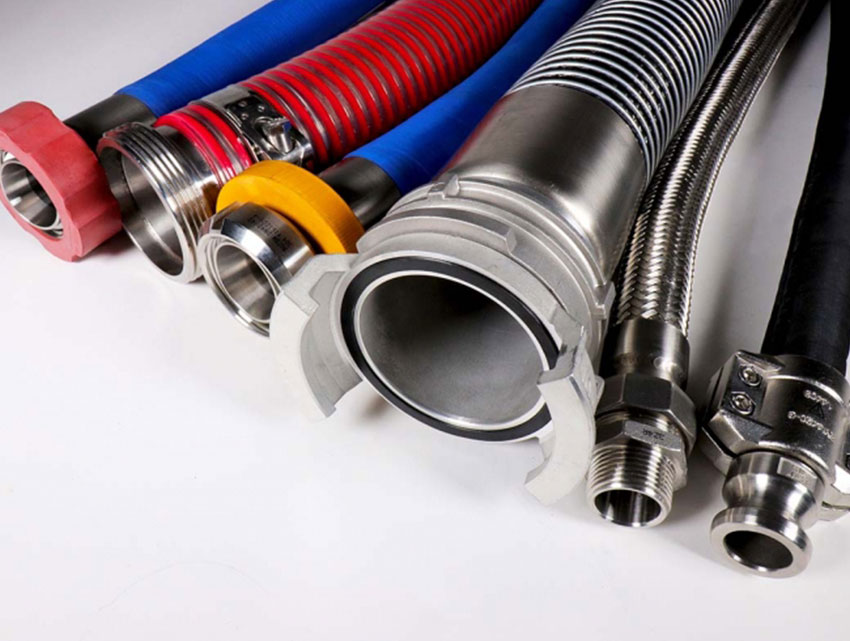
There is a wide range of hoses and fittings designed for specific uses in different sectors. To guarantee high performance in a fluid system, it’s important to choose a hose that’s suited to the sector of activity to which it refers. Indeed, an inappropriate hose can cause serious damage or be a source of real danger.
Among the different types of hose available, here is a list of the most commonly used connections, along with their different technical characteristics, depending on the application.
Pharmaceutical or biopharmaceutical applications
The connections used in this sector are designed for easy cleaning, whether in a closed circuit or for complete cleaning by dismantling the system.
Fitting surfaces are also designed to resist corrosion and reduce bacterial growth.
To meet the quality and safety requirements of the medical and pharmaceutical industries, flexible hoses must beUSP Class VI approved.
Class VI controls developed by the USP assess the biocompatibility of plastics and elastomers intended for medical use.
Semiconductors
In the manufacture of electronic products designed with semiconductor materials, cleanliness is one of the priorities.
The metal hoses used are specially designed for sensitive environments and applications requiring extreme cleanliness.
These connections have very fine threads, with a coating designed to resist contamination.
Other industrial applications
For many other industrial applications, hoses must be designed to withstand high pressures.
The pressure rating of some couplings can be as high as 60,000 psi, especially for high pressure couplings.
This sometimes requires the tubes to be prepared beforehand.
Focus on flexible hoses for sanitary fittings
In the sanitary fittings sector, there are 3 main types of flexible hose, each with a specific use.
The feed hose
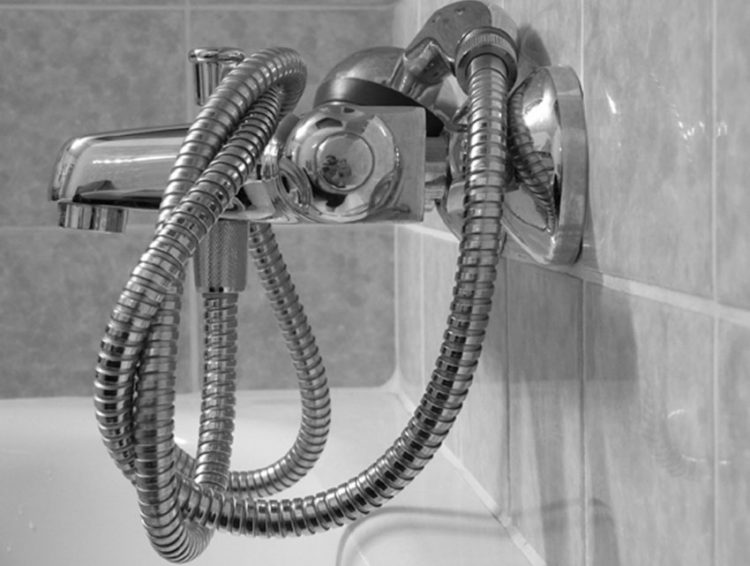
Flexible supply hoses are flexible metal or plastic pipes used to supply hot or cold water.
Sanitary hoses are used to connect sanitary equipment (washbasin, WC, tap, bidet, shower, faucets) to the household water supply network. Flexible hoses can also be used to connect plumbing and heating systems (water heaters, hot water tanks, radiators, air conditioning, etc.). They can be installed seamlessly with male or female threaded connections, or with compression fittings.
There are 2 different types of water supply hoses for connecting sanitary installations:
- The tap hose connects to sanitary equipment such as sinks, washbasins, toilets, water heaters and showers.
It can be straight or bent, braided in stainless steel or made of polyester.
Some sanitary hoses have a built-in shut-off valve which can be useful in case of tap failure. - Extension hoses: Made of stainless steel or rubber, extension hoses are generally used to supply cold water to washing machines or dishwashers.
The connections used in this sector are designed for easy cleaning, whether in a closed circuit or for complete cleaning by dismantling the system.
Fitting surfaces are also designed to resist corrosion and reduce bacterial growth.
To meet the quality and safety requirements of the medical and pharmaceutical industries, flexible hoses must beUSP Class VI approved.
Class VI controls developed by the USP assess the biocompatibility of plastics and elastomers intended for medical use.
Shower hose
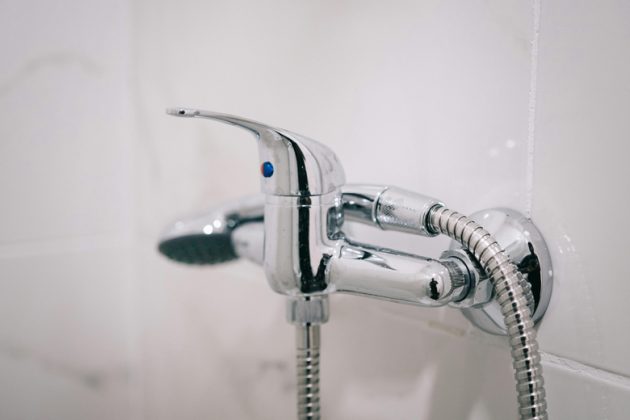
The shower hose connects the shower mixer – or bathtub mixer – to the shower head .
They come in different sizes and materials.
Shower hoses can be made of nylon, PVC or metal.
In addition to length and diameter, strength is the most important feature of a good shower hose.
Evacuation hoses
Not to be confused with supply hoses, drainage hoses are intended for draining waste water.
There are male and female threaded hoses, grey PVC glued hoses and white hoses to replace siphons.
The pressure-resistant hose consists of a rubber hose covered with a braided steel tube.
Do you have a project ? Contact us to bring your testing and validation projects to fruition.
Thibault MARCHAND
LF Technologies, your partner in pushing the boundaries of your testing.
What tests are carried out on sanitary fittings hoses?
Flexible feeder testing
Supply hoses play a vital role in sanitary installations, as they secure the water flow from the fittings into the fixtures (bathroom, kitchen, etc.). To ensure reliability, safety and long-term performance, flexible hose assemblies in drinking water installations on the market must meet specific criteria and standards.
Standards covering sanitary fittings, such as EN 200 or EN 817, require that connecting hoses comply with the European standard NF EN 13618. The products covered by this standard are hose assemblies:
- With or without braid.
- Between 90 and 2,000 mm in length.
- Nominal diameters (DN) 6, 8, 10, 13, 15, 18, 20 and 25.
To ensure their conformity, flexible hoses for drinking water installations are subject to regular inspections. Manufacturers must carry out laboratory and factory tests onhydraulic test stands. The valve test benches can be used to perform static pressure tests, as well as pressure cycle and water hammer fatigue tests.
Here is a list of the main tests carried out on sanitary fittings supply hoses:
- Mechanical resistance of the fitting to torque and bending
- Minimum flow measurement at 3 bar pressure
- Mechanical strength of hose when subjected to tensile force
- Tightness at 30 bar static internal pressure
- Resistance to fatigue generated by alternating pressure cycles from 5 to 30 bar and resistance to water hammer (pressure cycles from 5 to 50 bar)
- Resistant to temperature cycles from 20 to 90°C
- Frost resistance: flexural strength and compressive strength after prolonged exposure to -20°C
- Corrosion resistance
- Flexibility test, corresponding to a tensile test on a hose wound around a small-diameter circular mandrel
- UV resistance

Shower hose tests
Shower hoses for sanitary fittings are regulated by standard NF EN 1113.
It applies to “It applies to “flexible shower hoses, regardless of the material used, intended to equip and complete the sanitary fittings of baths or showers reserved for personal hygiene“.
Hydraulic characteristics
- Flow test: The principle consists of measuring the flow rate through shower hoses using cold water (T 30°C) to determine their flow class.
Mechanical characteristics and sealing
- Tensile strength: The principle of this test is to subject the hose to a tensile force for a certain period of time.
- Flexural strength: This test is designed to check the durability of the hose at the connection ends when subjected to bending.
- High-temperature pressure resistance: In this test, the hose is subjected to high pressure and temperature (70°C) for a given period of time, within the recommended operating limits.
- Leak-tightness after tensile and bending strength test: The test consists of subjecting the hose to the appropriate pressure (2 or 5 bar), using cold water only.
- Thermal shock resistance test: The principle of the test is to check the tightness of the hose under alternating temperatures.
- Swivel connection: Where a shower hose is fitted with a swivel, the swivel must be able to function correctly and prevent the hose from twisting.
The purpose of this test is to check the function of the swivel joint.
The endurance test benches are used to test the service life of faucets, mixers, diverter valves, mechanical and thermostatic mixing valves in accordance with current standards.
Tests carried out on test benches comply with standards and certifications. Issued by AFNOR Certification, NF certification attests that a product complies with standards and any additional technical specifications required by the market. It guarantees the quality and safety of certified products and services.
Discover other articles and tips

What methods are used to test pipes in the building industry?

Who uses test benches?
What are the main types of water heaters ?
