
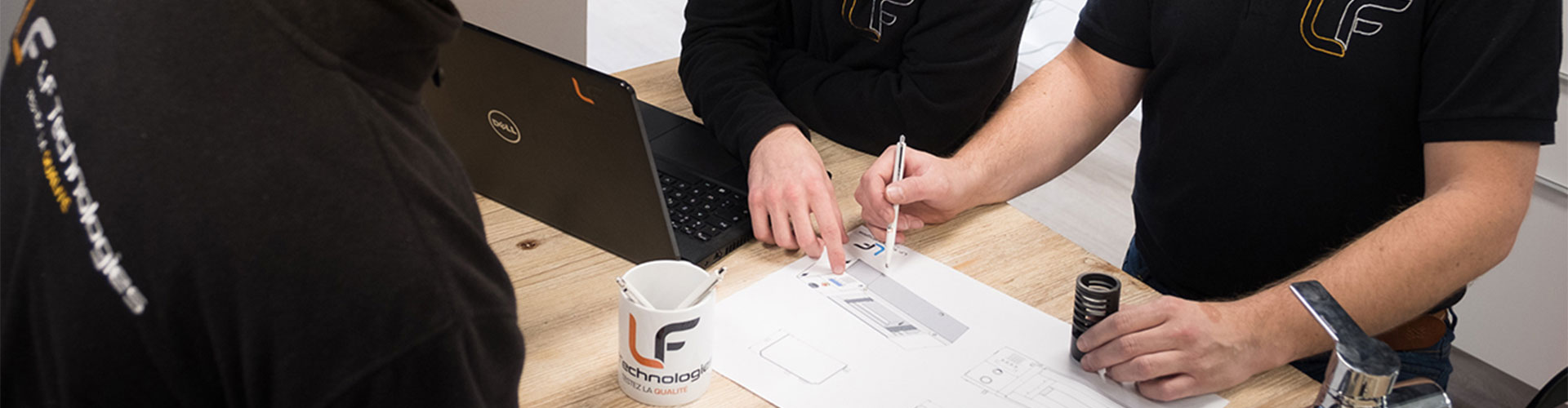
Project Progress
Our team of experts works on the design of your machine from the pre-design phase right through to its commissioning.
The SolidWorks drawings, circuit boards, software, assembly, on-site installation, technical documentation etc. are tailor-made by our engineers. Everything is tailored to your project.
1 – PROJECT MANAGEMENT
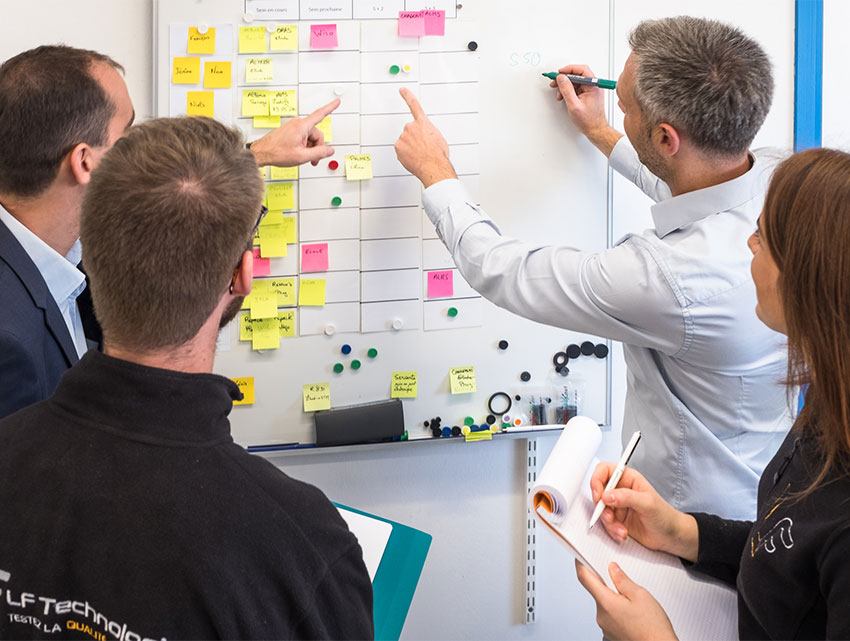
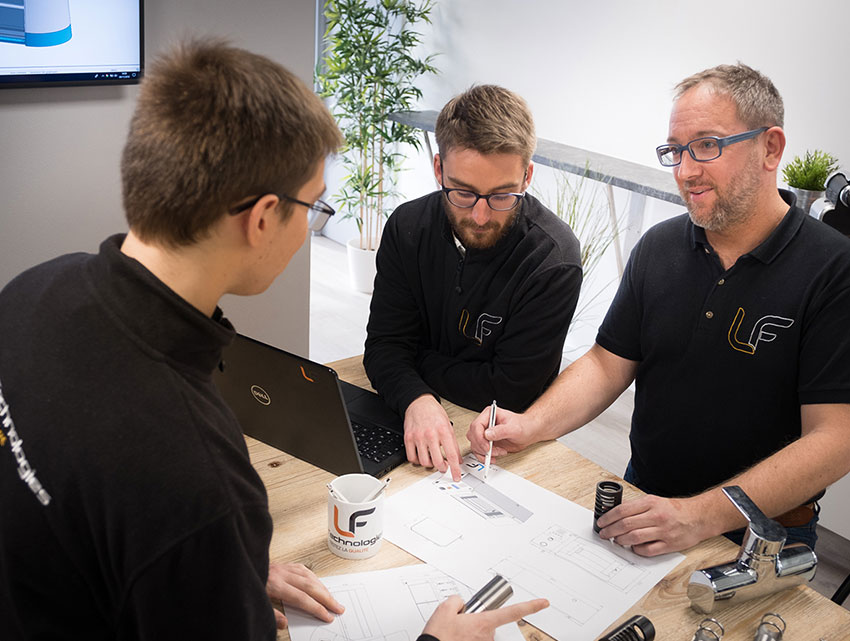
Our team of engineers and technicians will support you throughout your project, from the technical proposal through to the commissioning of your machine, including the design and assembly stages.
Our after-sales service provides support following delivery and/or commissioning. We are also able to offer you various services via our maintenance contracts.
2 – TECHNICAL PROPOSITION
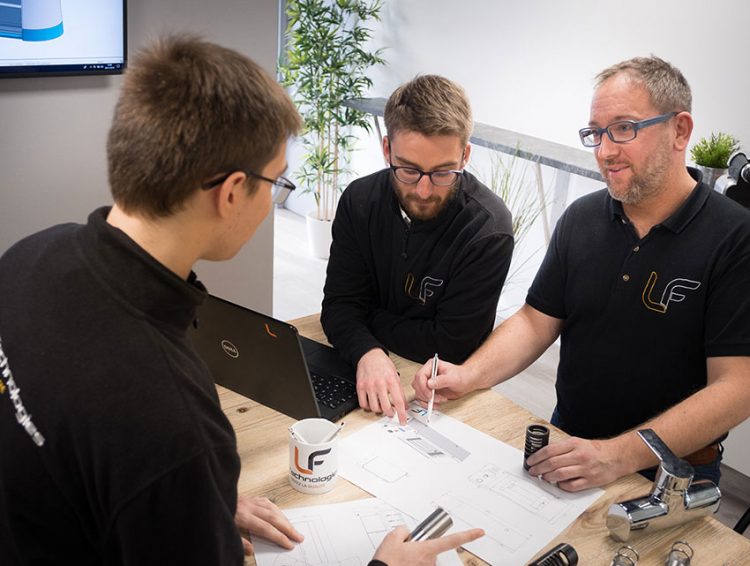
Our sales department will review your specifications and assess the feasibility of your project, taking all its specific requirements into account.
Our preliminary design team can then produce an initial CAD sketch of your machine based on your various requirements and technical constraints.
We provide you with a turnkey technical and financial proposal to serve as the basis for negotiations between our sales and technical teams.
3 – PROTOTYPING
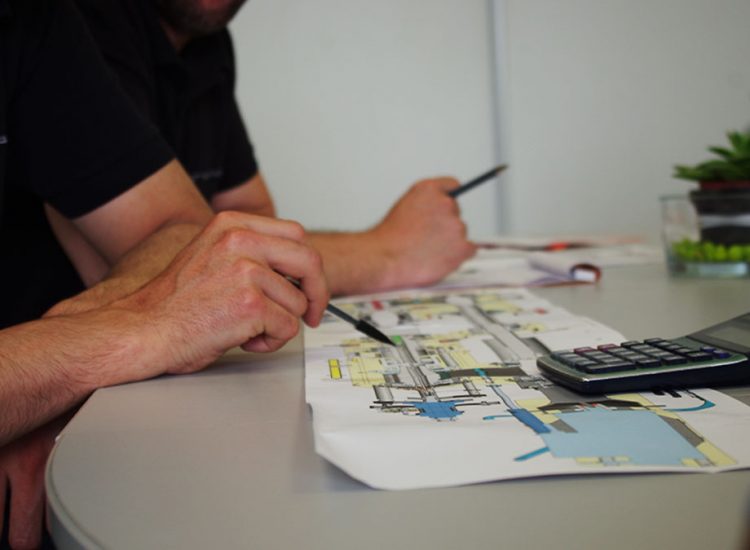
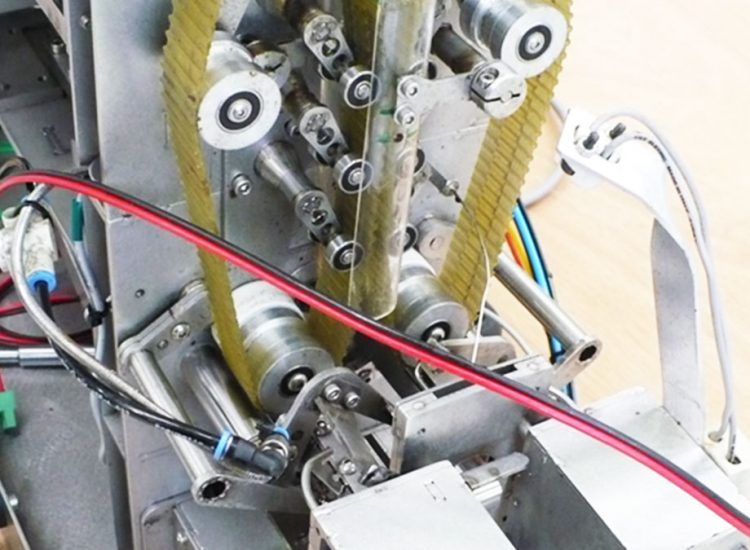
Our technical teams can produce a preliminary prototype (test assembly) to demonstrate the feasibility of your project, enable its technical validation, and identify the optimal solution based on your requirements.
Following this testing phase, data analyses are carried out and a technical test report is issued. These allow our technical teams to finalise the solution and to propose the best technical and commercial turnkey offer.
4 – LAUNCH
A project manager will be assigned to your project and will act as your main point of contact throughout the project.
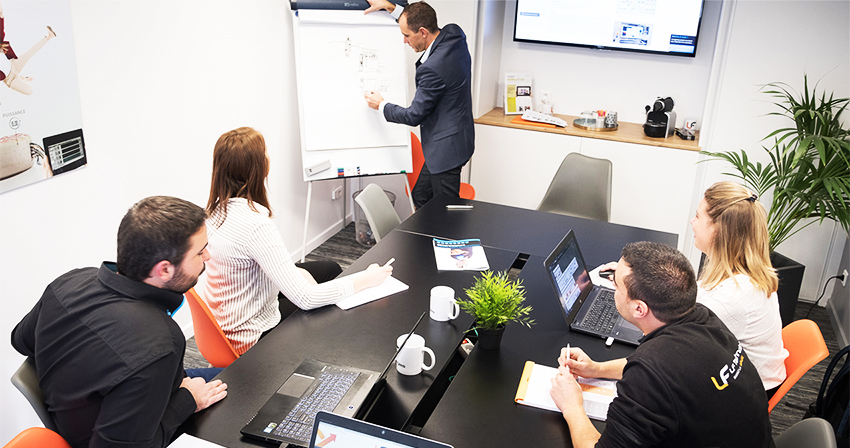
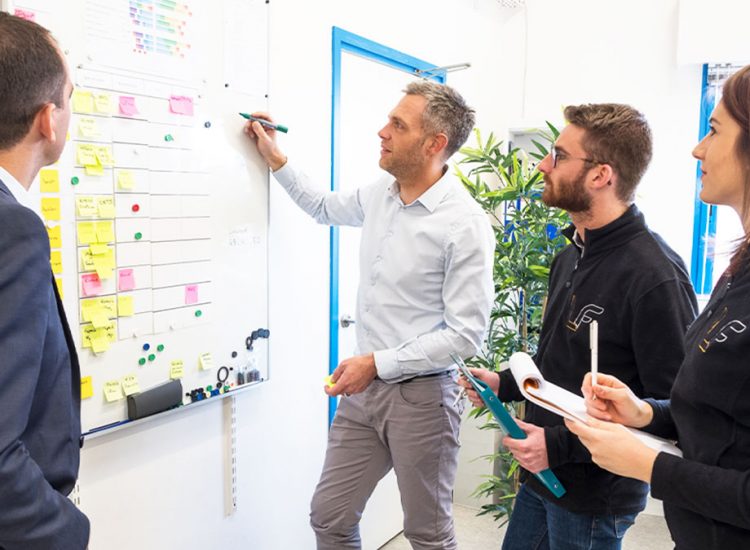
An initial project kick-off meeting is scheduled between the LFT team and your technical contacts, with the aim of introducing each team member, clarifying everyone’s role and establishing a partnership.
A schedule for the project is drawn up.
5 – STUDY
Our engineers and technicians study and design your machine through several stages:
Pre-study :
- Pre-selection of components
- V1 synoptic (general graphic presentation) of the project
- Start of the drawings
- Calculation notes
Study :
- Programming synoptic
- Complete bill of materials (mechanical, electrical, etc.)
- Finalisation of diagrams and synoptics
- CAD files, mechanical simulation
- Calculation notes
- Risk analysis
- Visit to certifying body (Apave, etc.)
- HMI test
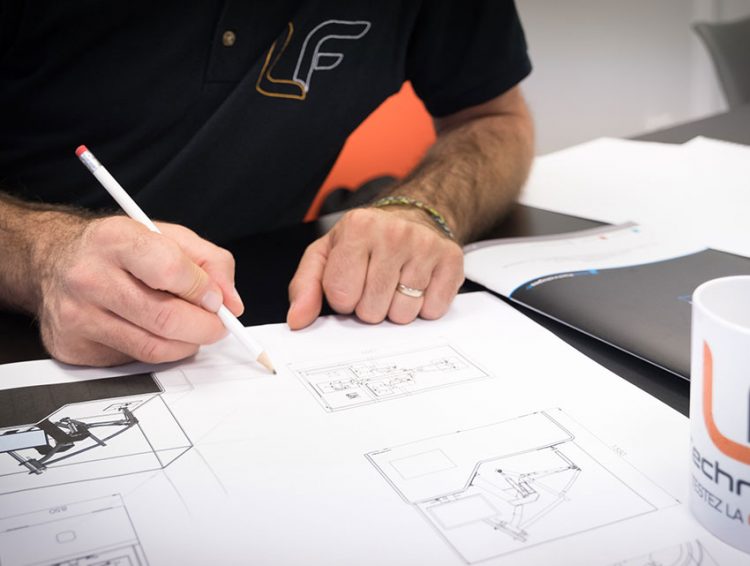
6 – MANUFACTURING
Once the design has been approved by your technical department, the production drawings are drawn up and the parts lists are sent to the procurement department so that orders can be placed with suppliers.
The parts received are checked and undergo quality control as they arrive at our site, and are then allocated to the various projects.
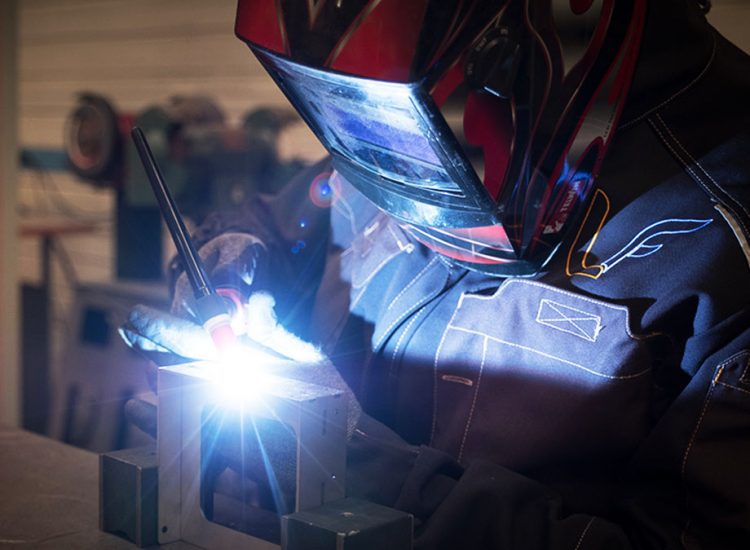
7 – ASSEMBLY AND INSPECTION
Mechanical, electrical, pneumatic and hydraulic assembly, as well as the soldering of circuit boards and installation, are carried out by our fitters in our workshops.
At the same time, our LabVIEW developer designs a programme in accordance with your specifications and in line with guidelines defined by LF Technologies (ergonomics, intuitiveness, ease of use, etc.).
The commissioning and testing phase takes place once the test machine has been fully assembled and wired.
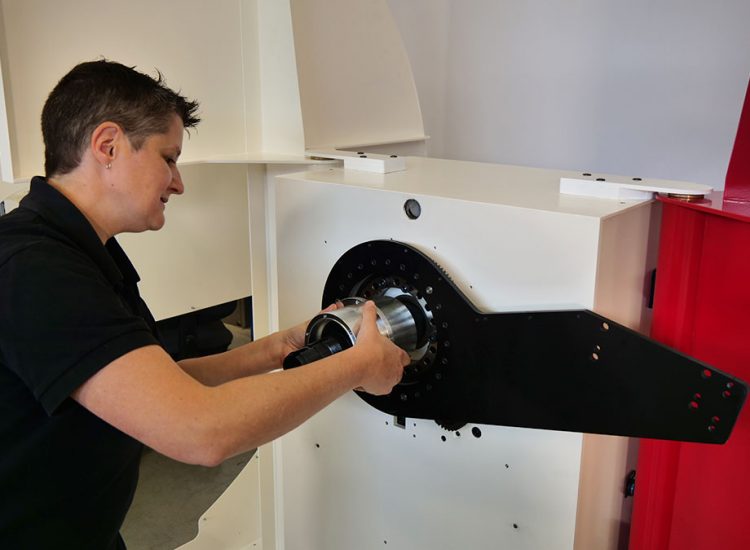
8 – COMMISSIONING
We organise a technical acceptance test at our premises with your technicians.
Technical acceptance test: the stage at which the client approves the selected solutions, even if they differ from those specified in the order or at the conclusion of the design phase. At this stage, all the machine’s functions can be validated independently of the complete automation system.
Once the final adjustments have been made, a comprehensive and final checklist is drawn up by the project manager to ensure that everything complies with the specifications, the order, any amendments, etc.
Our logistics team organises transport and plans the commissioning at your site.
During commissioning, we provide training for the test bench operators.
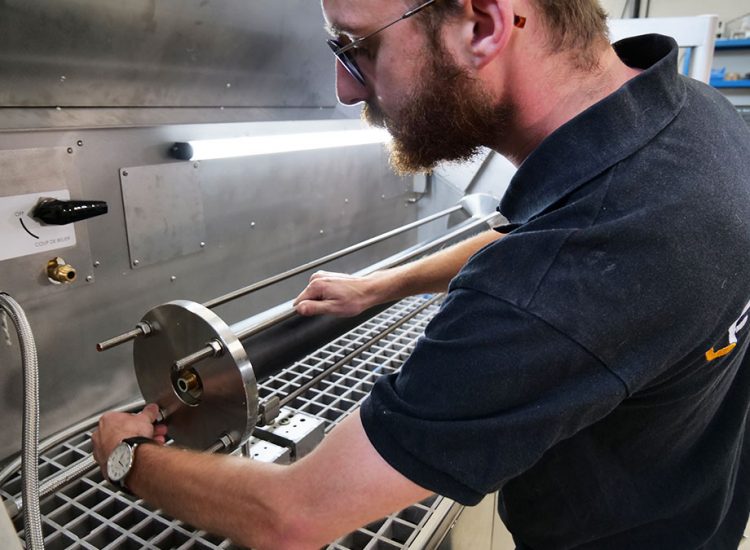
Our support solutions
In addition to our warranty, we offer support for your machines through our maintenance solutions. We can intervene on spare parts changes, sensor calibration or answer your questions related to the use of your test bench or production machine.
We offer maintenance contracts (LF’Assist) adapted to your needs, including audit and preventive interventions, telephone assistance hours and controlled time breakdown interventions.
Project management in the design of special production machines
The success of a special-purpose machine design project in the industrial sector is of vital importance to the competitiveness of LF Technologies. Project management plays an essential role in coordinating the various stages of development, guaranteeing the creation of high-performance equipment that meets customers’ needs.
Rigorous front-line planning
The crucial initial step in the successful design of special production machines is rigorous planning. This phase defines the objectives, resources required and deadlines to be met. It also requires anticipation of potential risks, accompanied by preventive solutions.
Planning tools
To facilitate planning, we recommend the use of tools such as:
- Project management software to organize tasks, allocate resources and track project progress.
- An online graphic visualization, providing an overview of the project and highlighting the links between the various tasks.
Communication: the key to success
Maintaining fluid and regular communication within the team is essential to ensure the smooth running of the special machine design project. Sharing information, clarifying responsibilities and resolving problems quickly are imperative.
Communication tools
To encourage communication within the team, several solutions can be put in place, including :
- Setting up a collaborative platform to centralize project information and facilitate collaboration.
- Regular meetings and videoconference calls to review project progress and discuss any difficulties.
Expertise required
The realization of a special production machine design project requires the convergence of different areas of expertise, such as :
- The design office, responsible for drawing up equipment plans and diagrams in line with customer requirements.
- Research and development (R&D), which works on the continuous improvement of machines and the integration of new technologies.
- Manufacturing, made up of technicians and workers specialized in machine construction and the assembly of mechanical, electrical and hydraulic components.
- Automation and control, responsible for developing and programming automated systems to control machines;
- Maintenance and after-sales service, intervening in the event of malfunctions to ensure long-term optimal operation.
Technological innovation at the core of the project
Technological innovation is at the core of the design of special production machines. This includes :
- Integrating the latest advances in artificial intelligence (AI) and the Internet of Things (IoT) to improve machine efficiency and flexibility.
- The development of augmented reality solutions to facilitate operators’ work and optimize maintenance.
- Exploiting the possibilities offered by additive manufacturing technology (3D printing) to simplify the production of complex parts and reduce costs.
These innovations make LF Technologies’ machines more competitive, while meeting today’s environmental and social challenges.
Quality Culture and Continuous Improvement
To guarantee the success of a special-purpose machine design project, it is imperative to establish a culture of quality and continuous improvement. This implies :
- Unite LF Technologies teams around values such as operational excellence, commitment and customer satisfaction.
- Establish a quality management system (QMS) based on international standards (ISO 9001), involving all LF Technologies employees in a continuous improvement process.
- Set up key performance indicators (KPIs) to measure the efficiency of the design process and track project progress.
- Carry out audits and identify areas for improvement to correct weaknesses and promote best practices.
Thanks to rigorous planning, effective communication, adapted skills, a constant approach to innovation, and a culture of quality, LF Technologies can successfully meet the challenges of project management in the design of special production machines.